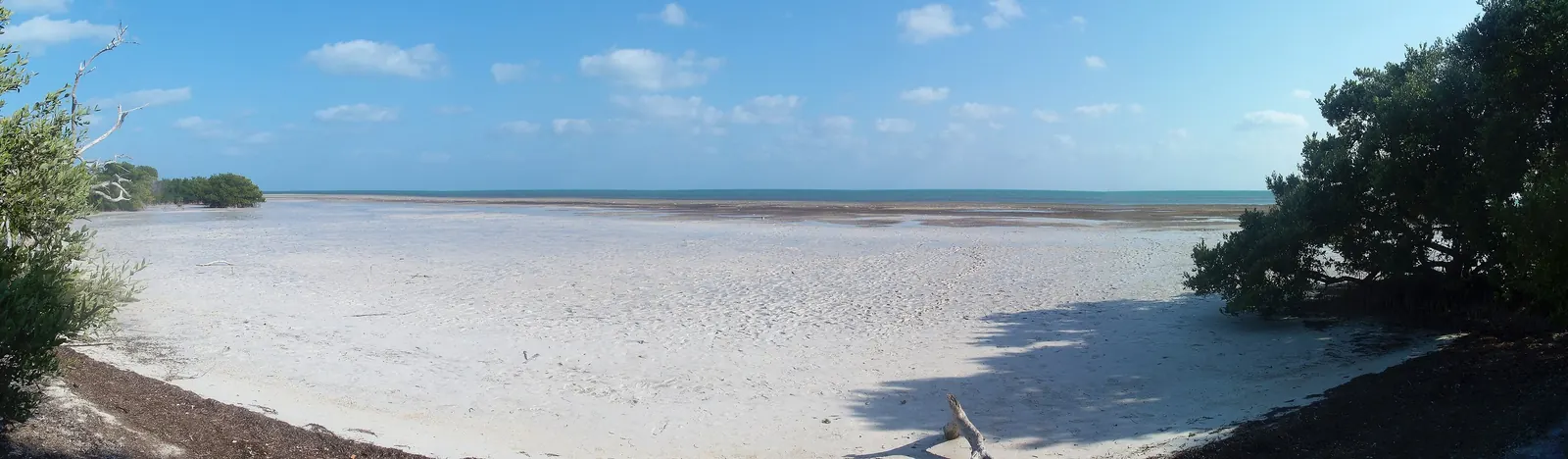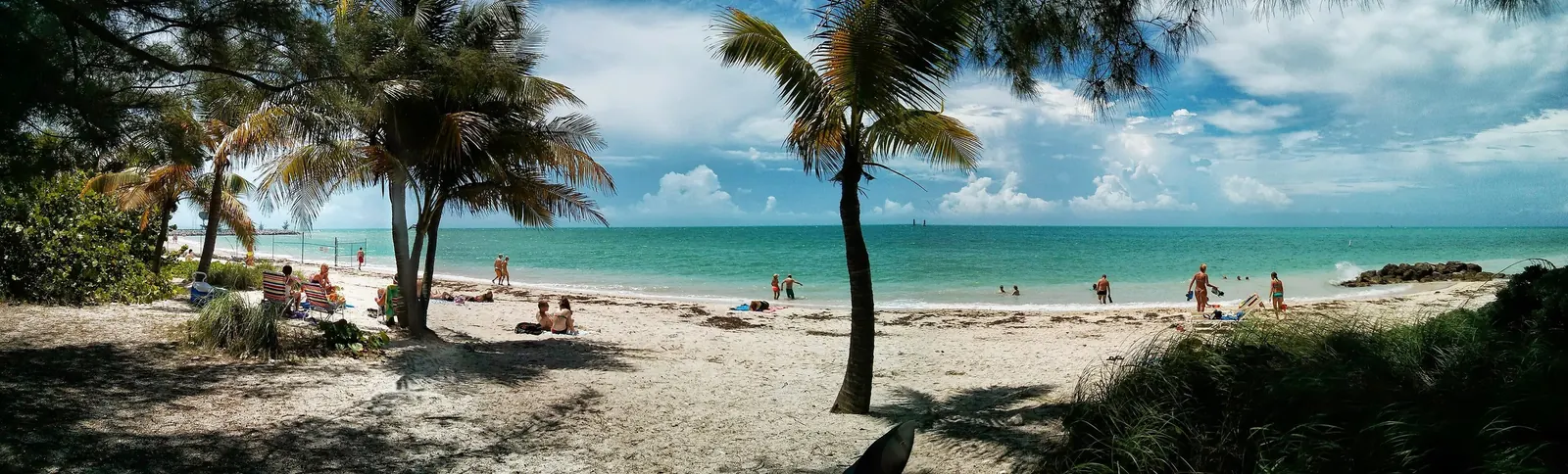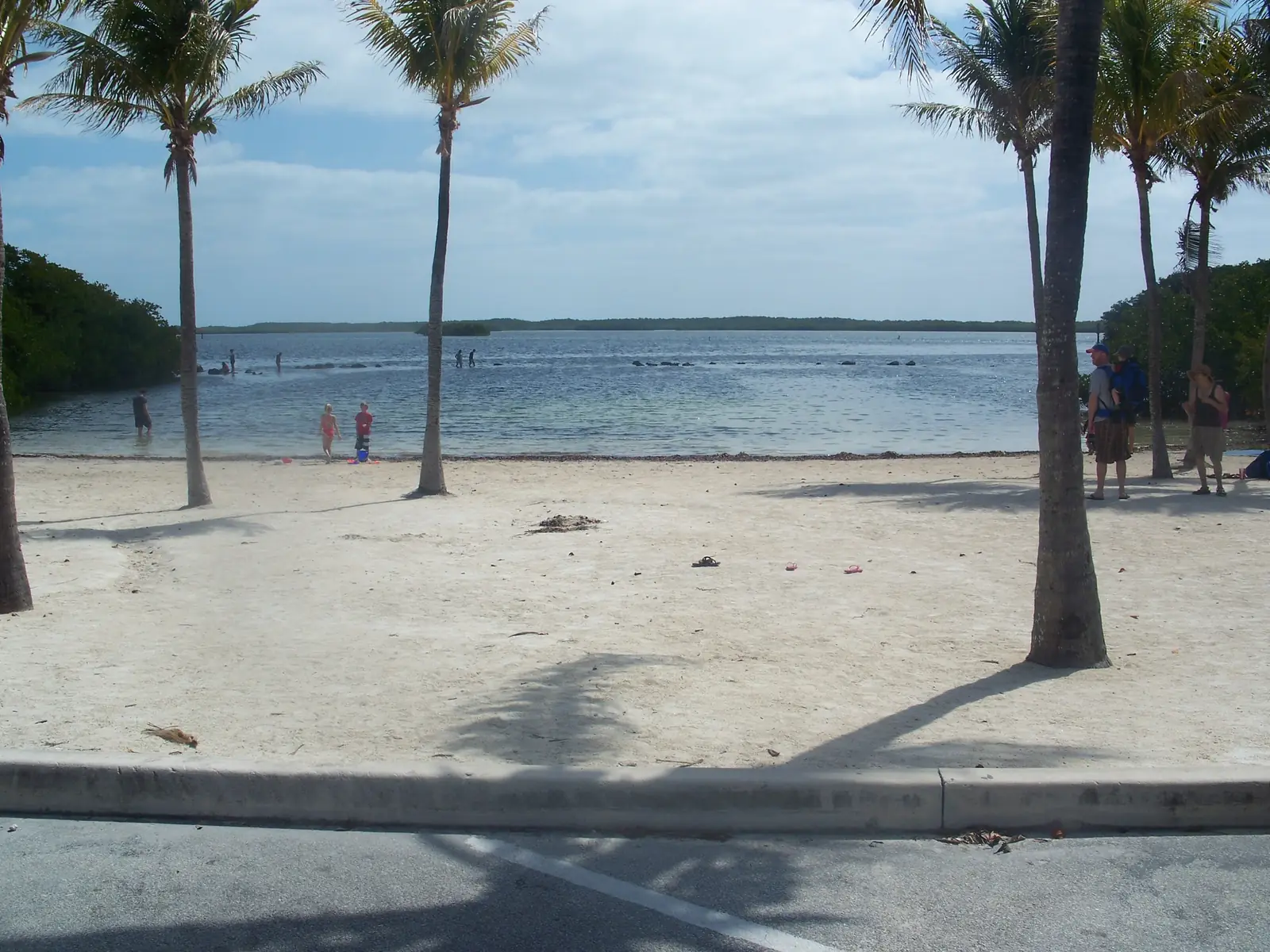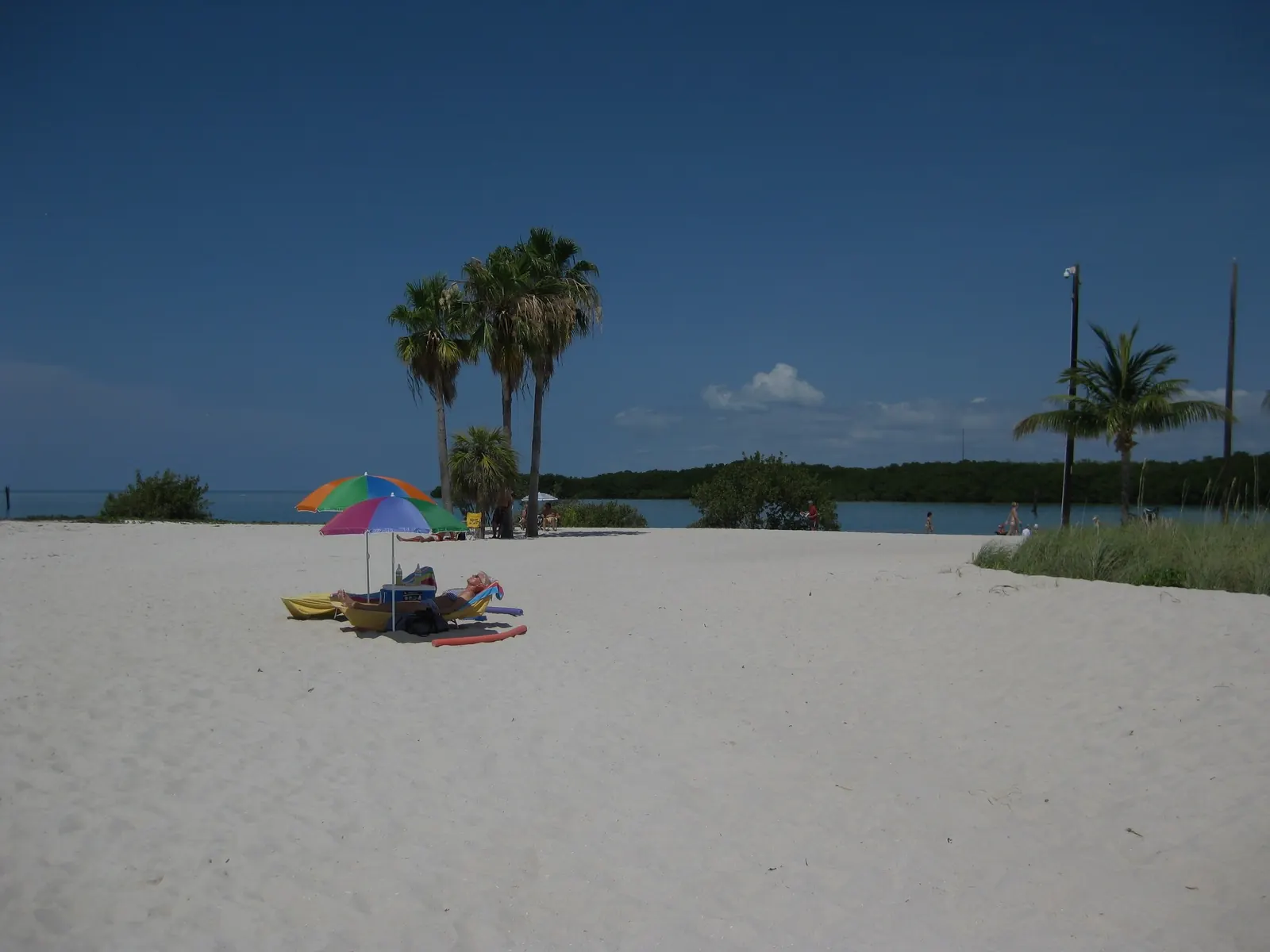
A turtle nesting beach can sound like a closed beach. Sombrero is not one. The City of Marathon, which runs it, limits human activity near active nests and surveys the sand for new ones, and its page puts those nests at typically less than 10% of the available beach area. Here is what that means for a beach day, read from the City’s Sombrero Beach page on October 24, 2026.
TL;DR, checked October 24, 2026
The City of Marathon gives Sombrero’s nesting season as April through October, primarily loggerheads, nesting at night. What closes: the City limits activity near active nests, typically under 10% of the beach area. What the City’s page does not describe closing: the park, its pavilions and playgrounds, and the rest of the sand. Hours, as posted October 24, 2026: 7:00 a.m. to dusk.
The season, as the City gives it
The City’s page says that from April through October, primarily loggerhead sea turtles come ashore at night to nest at Sombrero. Our seasons record carries that as April 1 to October 31, from the same City page, and it covers Coco Plum Beach too, which the City also lists as a turtle nesting beach.
We checked on October 24, 2026, 7 days before the posted window ended. For a trip next spring, reopen the City page before April rather than relying on this year’s text. Seasons, rules and wording can change between years, and the City is the source.
- Sombrero Beach is a sea turtle nesting beach: from April through October, primarily loggerheads come ashore at night. The City limits human activity near active nests, which typically represent less than 10% of the available beach area; the City surveys the beach for new nests. City of Marathon: Sombrero Beach
What closes: the area around active nests
The City limits human activity near active nests. Its page does not spell out the form those limits take, whether a distance, a marker or a time of day, so we will not guess. What it does give is scale: active nests typically represent less than 10% of the available beach area. Because the City surveys the beach for new nests, the area with limits can grow as the season goes on.
If you come across a nest area, give it room and follow whatever the City has posted there. For a question about a specific rule, City of Marathon Parks and Recreation is at 200 36th St Ocean, 305-743-6598.
- City of Marathon Parks and Recreation: 200 36th St Ocean, Marathon, FL 33050; 305-743-6598. City of Marathon: Sombrero Beach (contact block)
What stays open
Everything else the City lists for Sombrero is not tied to nesting on its page: the sandy Atlantic beach outside nest areas, the shady park, picnic pavilions, playgrounds, volleyball courts, restrooms and showers. The City redeveloped the park in 2001 for total handicap accessibility, and nothing on its page ties that access to the nesting calendar.
The hours do not change for the season either, as far as the page shows: 7:00 a.m. to dusk, Monday through Sunday, as the City of Marathon posted them October 24, 2026. To get there, turn south on Sombrero Beach Road and drive to the end of the road.
- Sombrero Beach in Marathon is open Monday through Sunday, 7:00 a.m. to dusk; turn south on Sombrero Beach Road and drive to the end of the road. City of Marathon: Sombrero Beach
- Sombrero Beach is a sandy beach on the Atlantic framing a shady park with picnic pavilions, playgrounds, volleyball courts, restrooms and showers; the City redeveloped it in 2001 for total handicap accessibility. City of Marathon: Sombrero Beach
Turtles nest at night; the park closes at dusk
Loggerheads come ashore at night, per the City, and Sombrero’s posted hours end at dusk. Put those two facts together and an after-dark nest walk on Sombrero is not something the posted hours allow. We found no City-run turtle walk on the pages we read.
The City page lists no specific rules on lights, flash photography or beach furniture for nesting season. If those matter to your visit, ask Parks and Recreation rather than going by the rules of a beach in another county.
Coco Plum, the City’s other nesting beach
Coco Plum Beach is a more natural beach area beside a wetland, with restrooms and a covered pavilion, and the City lists it as a turtle nesting beach as well. It opens half an hour later than Sombrero, 7:30 a.m. until dusk, as the City of Marathon posted it October 24, 2026. Turn south on Coco Plum Drive; the entrance is 1.4 miles on the right.
- Coco Plum Beach in Marathon is a more natural beach area with an adjacent wetland, restroom facilities and a covered pavilion; it is also a turtle nesting beach. Hours 7:30 a.m. until dusk. Turn south on Coco Plum Drive; the entrance is 1.4 miles on the right. No RV or bus parking. City of Marathon: Coco Plum Beach
Parking and dogs
Neither beach has RV or bus parking, per the City. On dogs, the City says all of its parks are dog friendly except the Community Park soccer and baseball fields, with dogs leashed and owners picking up after them. Neither beach page posts a separate dog rule for the sand. In nesting season, a short leash keeps a curious dog clear of a nest area.
- There are no RV or bus parking spots at Sombrero Beach (City of Marathon). City of Marathon: Sombrero Beach
- All City of Marathon parks are dog friendly except the Community Park soccer and baseball fields; dogs must be leashed and owners must pick up after them. City of Marathon: City Parks and Beaches
Every turtle window we have a receipt for is on our sea turtle season page, and the Marathon beaches page sets Sombrero, Coco Plum and Curry Hammock State Park side by side.
Turtle season questions
When is sea turtle nesting season on Marathon beaches?
From April through October, primarily loggerhead sea turtles come ashore at night at Sombrero Beach and Coco Plum Beach. The City limits human activity near active nests, which typically cover less than 10% of the beach area; the rest stays open.
Source: City of Marathon: Sombrero Beach
Written by the Florida Keys Beaches Editorial Team. Some content may be AI-generated. People check every fact before it publishes.
Dates, rules and hours can change. The organisers have the final word: Florida State Parks (official site)